<aside>
Home |AAN Overview |Teaching |Innovations & Impact |Featured Case Studies |Testimonials |Scholarship & Leadership
</aside>
I see the university educator not only as a subject specialist, but as a designer of conditions in which students can construct, test and communicate knowledge. in short a ”learning designer”.
My teaching philosophy is based on the constructivist view of education. Meaningful learning occurs when students actively make sense of ideas through experience, investigation, dialogue, application and feedback rather than receiving information passively.
This is particularly important in built environment education. Technical knowledge is necessary, but professional practice also requires judgement: the ability to interpret uncertain evidence, distinguish symptoms from causes, understand context, justify decisions and communicate recommendations responsibly.
I therefore design learning experiences in which students investigate real or professionally realistic situations, collaborate with others, produce visible learning artefacts, defend interpretations and reflect on the consequences of professional decisions.
The objective is not simply that students leave a course knowing more. It is that they leave better able to use what they know.
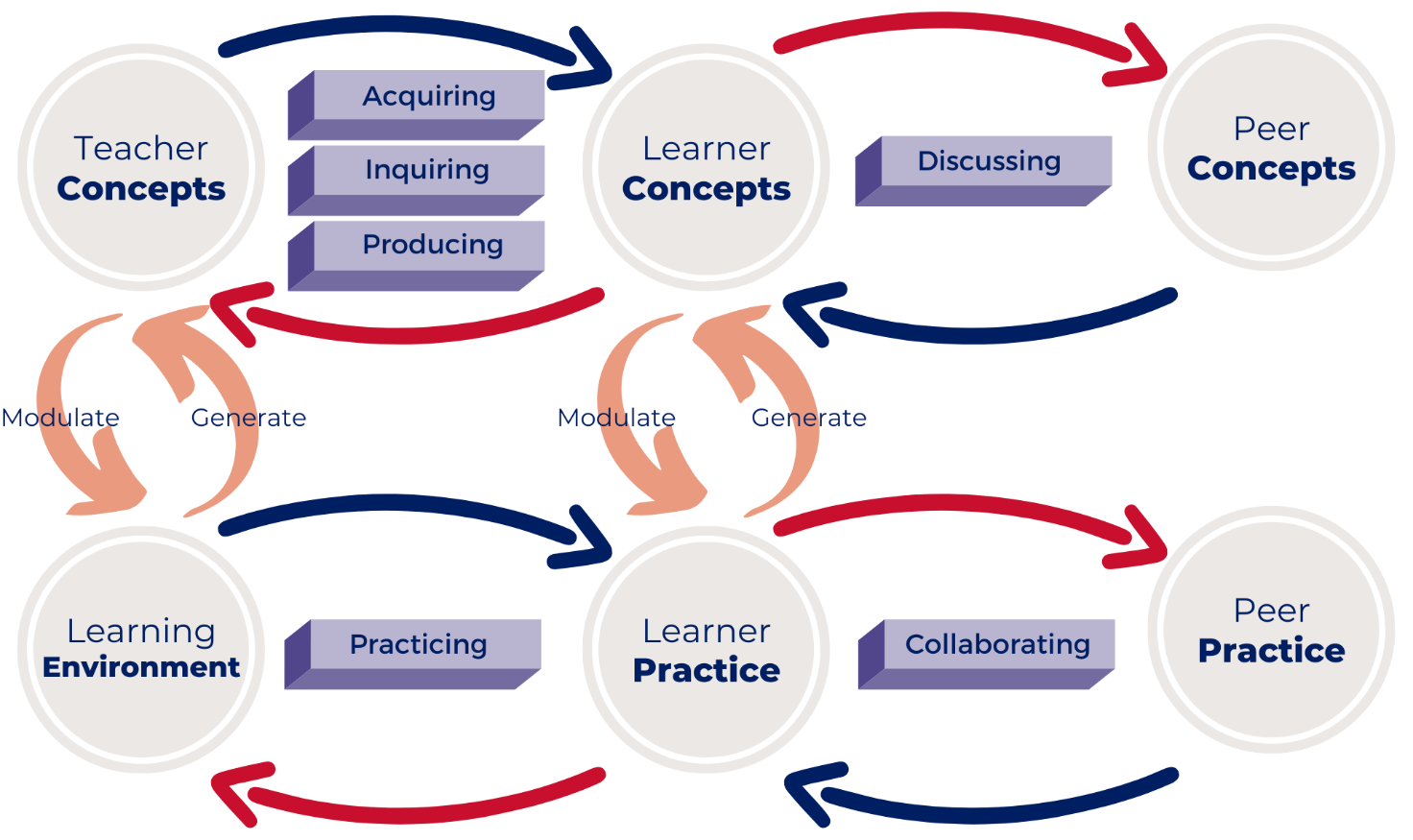
Laurillard's Conversational Framework as a design principle. I use the framework to think about learning as the process that occurs through acquisition, inquiry, discussion, collaboration, practice and production. The value of the framework for my practice is not the diagram itself, but the design question it creates: what will students actually do with the knowledge they encounter?
Here Professor Laurillard explains the Conversational Framework.
Here Professor Laurillard explains the Conversational Framework.
I begin with the intended learning outcomes and ask what students would need to do or produce to demonstrate them. Assessment is therefore designed early rather than added after teaching content has been planned.
Tasks ask students to diagnose, investigate, interpret, advise or communicate in ways that resemble disciplinary practice.
Reports, posters, diagrams, video, field records, presentations and discussions allow both the student and educator to examine the quality of reasoning
Group work uses staged submissions, peer interaction, interim critique, presentation and individual accountability so that collaboration becomes a learning process rather than task division.
Moodle/SPeCTRUM prepares students for contact sessions through clear objectives, activity sequences and guided self-directed learning.
Questioning, interim critique, peer dialogue and formative feedback allow misconceptions to be addressed before final submission.

Turning resources into a learning pathway. Readings, a short synthesis task, H5P interactive videos, Teams discussion and reflection are deliberately sequenced and given indicative completion times. Each resource therefore has a pedagogical function within the week's learning process rather than appearing as an isolated file or link.

Making the learning journey visible. The weekly page begins with explicit learning objectives, expected study time, a concise orientation to the week's purpose and a guiding question. The instructional design tells students not only what content exists, but what they are expected to achieve and how to begin.
Moodle: clear outcomes, estimated effort, guiding prompts, ordered activities, visible deliverables, interaction and reflection. This makes self-directed online learning more manageable and allows contact time to be used for richer discussion, application and feedback.